Radiology & Imaging Department
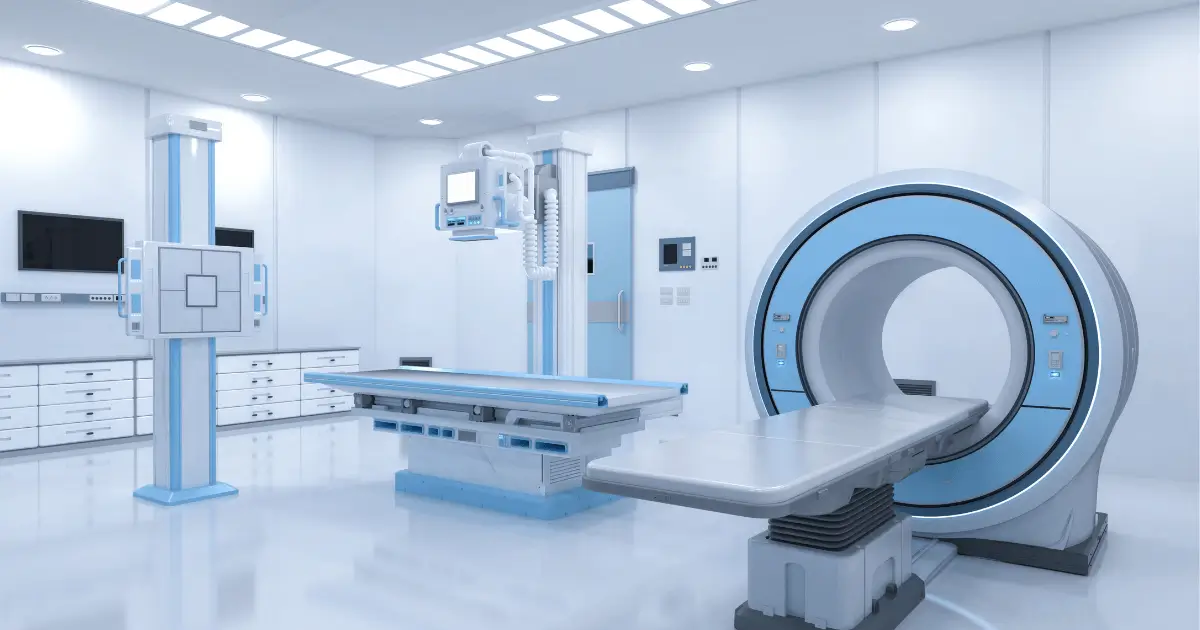
The Radiology & Imaging Department is a high-technology, capital-intensive wing of a hospital that utilizes ionizing radiation, magnetic fields, and high-frequency sound waves to visualize the internal structures of the body. Because it serves both in-patient wards, the Emergency Department, and out-patient clinics, its location and workflow optimization are critical to the entire hospital's efficiency.
End-to-End Architectural Planning, Heavy Equipment Engineering, Radiation Shielding, and PACS Integration
MediHeaven delivers complete turnkey engineering for hospital Radiology and Imaging Departments—combining structural floor reinforcement, copper RF Faraday cages, lead-shielded radiation barriers, and enterprise DICOM networks to serve as the diagnostic engine of the modern hospital.
Constructing an in-house radiology department requires complex engineering. MediHeaven designs and executes these spaces to manage multi-ton magnet loads, cooling systems for superconducting coils, high-voltage electrical distribution, zero-leakage radiation protection, and seamless integration with the hospital’s Electronic Health Record (EHR) systems.

Key Functional Zones & Spatial Planning
High-Field MRI Suite:
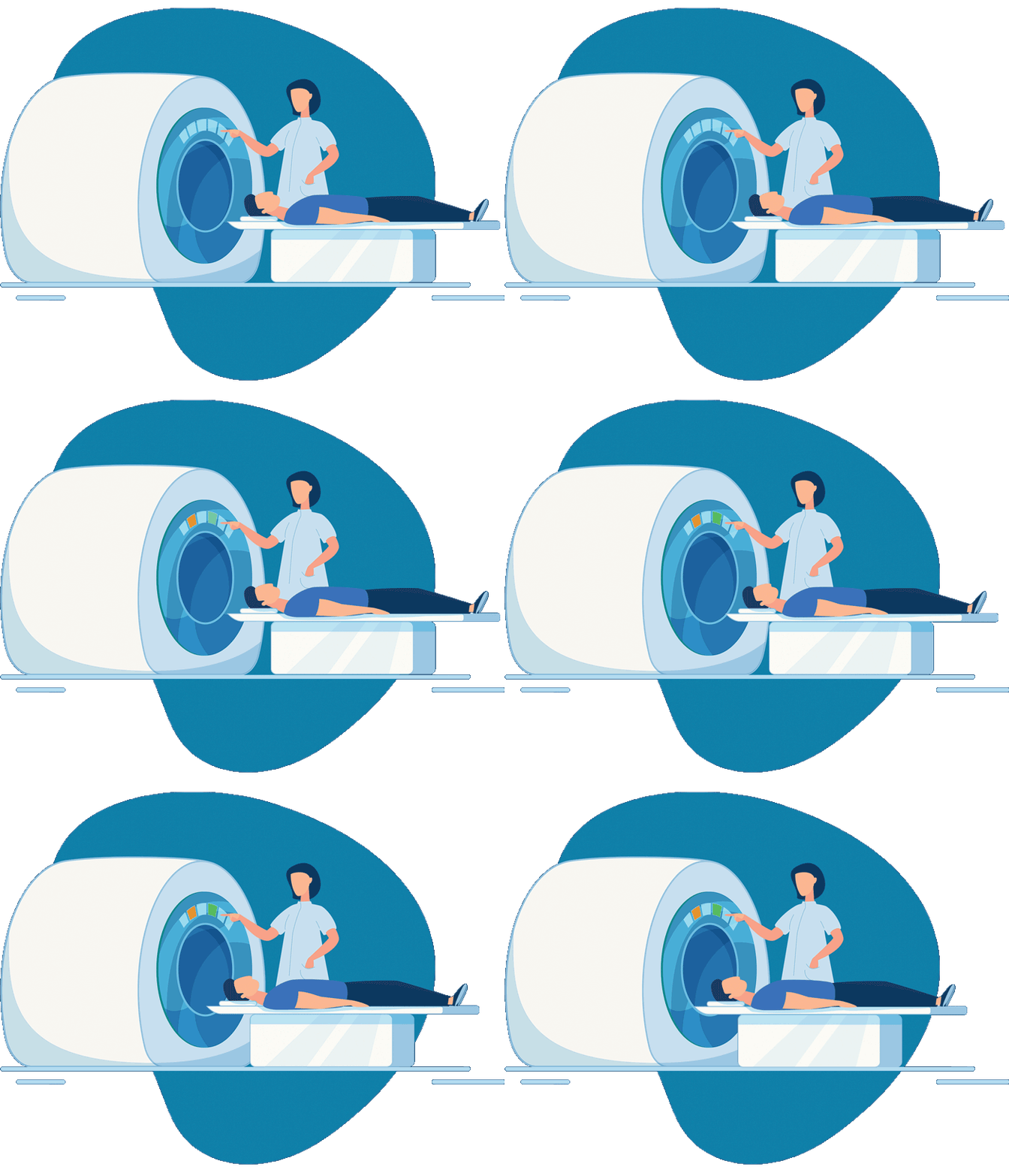
An RF-shielded scanner enclosure (Faraday cage), equipment room housing gradient amplifiers and helium chillers, control room, and a strictly monitored non-magnetic patient prep area (Zone III and Zone IV).
Multi-Slice CT Suite (Emergency & Routine):
Lead-lined CT rooms strategically positioned near the Emergency Department for rapid trauma scans, featuring high-voltage generator spaces and rapid contrast-injector preparation stations.
General Radiography (X-Ray) & Fluoroscopy:
Dual rooms for digital chest and skeletal imaging, alongside specialized fluoroscopy suites for real-time gastrointestinal and interventional imaging.
Women’s Imaging & Breast Center:
A private, self-contained sub-department containing digital 3D mammography (tomosynthesis), DEXA bone densitometers, and dedicated breast ultrasound units.
Ultrasound & Doppler Wing:
Quiet, dimmable, non-radiation examination rooms equipped with 3D/4D ultrasound systems for abdominal, obstetric, and vascular diagnostics.
Radiologist Interpretation Hub (Reading Room):
Acoustically isolated, ergonomically designed darkrooms housing 5-megapixel medical-grade diagnostic displays, dictation systems, and direct PACS/RIS connectivity.
RF Shielding (Faraday Cage):
Seamless copper lining surrounding the MRI suite walls, floor, and ceiling to prevent ambient radio frequency signals (like hospital radios or cell phones) from interfering with magnetic image reconstruction.
Lead Radiation Containment (AEC Compliance):
Calculated lead-sheet thickness (typically $1.5\text{ mm}$ to $3.0\text{ mm}$ equivalent) built directly into drywalls, automated doors, and operator viewing windows to ensure zero scatter radiation reaches adjacent hospital corridors.
Cryogen Quench Pipe Infrastructure:
Dedicated stainless-steel exhaust pipes routed from the MRI magnet directly to the hospital exterior roof to safely vent rapidly expanding helium gas in the event of an emergency magnet quench.
Structural Load & Micro-Vibration Mitigation:
Thickened structural concrete slabs engineered to support the immense weight of MRI and CT gantries without structural deflection, isolated from the vibrations of hospital elevators or mechanical plant rooms.
Precision HVAC & Clean Power:
Independent HVAC units maintaining strict temperature ($18\text{ to }21\,^\circ\text{C}$) and humidity parameters for overheating imaging computers, backed by high-capacity Uninterruptible Power Supply (UPS) systems to prevent scan failure during hospital power transitions.
Specialized Engineering & Safety Standards
Clinical Workflows & Continuum of Care
- Comprehensive Preadmission & Health Assessment: Multidisciplinary evaluation of mobility, cognitive function, medical needs, and nutritional requirements.
- Individualized Care Plan Development: Formulating tailored clinical schedules involving primary nursing, physical therapy, medication administration, and dietary management.
- 24/7 Skilled Nursing & ADL Support: Round-the-clock monitoring of vital signs, wound care, pain management, and daily hygiene assistance.
- Rehabilitative & Social Engagement: Daily physical therapy sessions, cognitive exercises, recreational activities, and family visiting programs.
- Palliative & Continuous Nursing Care: Providing seamless transition to higher-intensity medical care or end-of-life comfort care as health conditions evolve.