
Critical Care Department
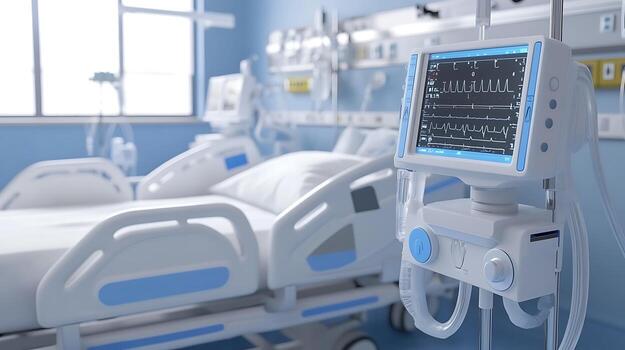
The Critical Care Department represents the most acuity-sensitive wing of any healthcare institution, housing the Intensive Care Unit (ICU), Neonatal Intensive Care Unit (NICU), Coronary Care Unit (CCU), and High Dependency Unit (HDU). These units are engineered to support, monitor, and sustain life in patients experiencing life-threatening organ failure, acute cardiac events, severe surgical trauma, or neonatal vulnerability.
End-to-End Architectural Planning, Modular Cleanroom ICU Design, Medical Gas Pendants, and Centralized Telemetry Networks
MediHeaven delivers complete turnkey engineering for Critical Care Departments—combining modular ICU/NICU/CCU/HDU bed stations, ceiling-pendant utility delivery, positive/negative pressure isolation rooms, continuous physiological monitoring, and infection-controlled environments.
Engineering an integrated critical care complex requires continuous multi-parameter telemetry, uninterrupted back-up power, high-volume Medical Gas Pipeline Systems (MGPS), strict air changes for infection control, and unobstructed line-of-sight visual monitoring from central nursing hubs. MediHeaven designs modular, ergonomic critical care environments that maximize staff efficiency and patient safety while reducing acoustic stress.
Key Functional Zones & Spatial Planning

General Medical & Surgical ICU (MICU / SICU):
High-acuity bed stations arranged in an open-plan arc or perimeter layout around a central nursing desk, featuring motorized 360-degree ceiling pendants, invasive hemodynamic monitoring, and mechanical ventilators.
Neonatal Intensive Care Unit (NICU):
Quiet, temperature-controlled, low-light environment divided into Level I, Level II, and Level III care zones equipped with radiant warmers, closed incubators, infant CPAP/ventilators, and micro-volume infusion systems.
Coronary Care Unit (CCU):
Specialized cardiac monitoring beds equipped with 12-lead ECG telemetry, bedside intra-aortic balloon pump (IABP) integration, temporary cardiac pacing capabilities, and immediate crash cart accessibility.
High Dependency Unit (HDU / Step-Down Unit):
Intermediate care wing for patients requiring closer monitoring than general wards but no longer requiring invasive mechanical ventilation or complex organ support.
Negative-Pressure Airborne Isolation Suites:
Hermetically sealed isolation rooms featuring anterooms, hands-free scrub sinks, independent negative pressure HVAC controls, and dedicated pass-through hatches for contagious patient care.
Centralized Nursing Telemetry Hub:
Elevated central monitoring workstation displaying continuous real-time multi-bed physiological signals, arrhythmia alarms, and EHR documentation terminals.
Ceiling-Mounted Heavy-Duty Medical Utility Pendants:
Dual-arm motorized ceiling pendants delivering Medical Oxygen, Medical Air, Vacuum/Suction, $N_2O$, high-voltage electrical sockets, and data ports—keeping all floors 100% cable-free for rapid mobility.
Infection Control & Modular Cleanroom Construction:
Antibacterial, non-porous HPL or stainless steel wall paneling with coved seamless conductive vinyl flooring, eliminating dust traps and enabling rapid terminal disinfection.
Positive/Negative Pressure Air Exchange Systems:
Dedicated HVAC infrastructure providing $12\text{ to }15\text{ air changes per hour (ACH)}$ through HEPA filters ($\text{H14}$ efficiency), maintaining strict pressure cascades between clean corridors, patient bays, and isolation suites.
Isolated Electrical Power (IT Systems) & Redundancy:
Medical IT isolated power supplies (IPS) with continuous insulation monitoring (LIM) to prevent electrical shock and tripping, backed up by dual UPS batteries and automatic dual-generator failovers.
Acoustic & Circadian Lighting Control:
Sound-dampening ceiling tiles and dynamic LED circadian lighting systems (simulating natural daylight cycles) engineered to minimize ICU delirium and accelerate patient recovery.
Specialized Engineering & Safety Standards

Clinical Workflows & Continuum of Care
Acuity Triage & Emergency Admission: Direct transfer from Emergency, Operating Theaters, or external EMS with immediate connection to bedside monitors and life-support equipment.
Hemodynamic Stabilization & Organ Support: Deployment of mechanical ventilation, continuous renal replacement therapy (CRRT), vasoactive IV drug infusions, or cardiac assist devices.
Continuous Multi-Parametric Telemetry: Real-time monitoring of invasive arterial blood pressures, central venous pressure (CVP), $SpO_2$, end-tidal $CO_2$, and intracranial pressure (ICP) with centralized alarm management.
Step-Down Decoupling & Ward Transition: Systematic weaning from ventilator/inotropic support, transition to HDU intermediate monitoring, and eventual discharge to specialty inpatient wards.