
Gynecology & Obstretic
A Gynecology & Obstetrics Department (Maternal & Fetal Care Center) is a critical clinical unit dedicated to women’s reproductive health, prenatal care, high-risk pregnancy management, labor and delivery, and post-operative gynecological care. Because labor can quickly transition from a low-risk physiological process to an emergency surgical intervention, spatial planning must bridge residential comfort with rapid clinical response capabilities.
End-to-End Architectural Planning, LDR/LDRP Delivery Suites, Emergency C-Section Modular OTs, Fetal Telemetry Networks, and Neonatal Resuscitation Hubs
MediHeaven delivers complete turnkey engineering for modern Gynecology & Obstetrics Departments—combining family-centered birthing suites, concealed clinical utility headwalls, ISO Class 5 surgical cleanrooms, continuous cardiotocography (CTG) fetal monitoring, and immediate neonatal stabilization zones.
Engineering a turnkey OB/GYN facility requires balancing a warm, reassuring environment with high-acuity medical engineering. Key architectural priorities include single-room Labor, Delivery, Recovery, and Postpartum (LDR / LDRP) suites with concealed medical gases, immediate physical adjacency between labor rooms and emergency C-section operating theaters, strict acoustic insulation for patient privacy, and seamless patient transfer pathways to Neonatal Intensive Care Units (NICU). MediHeaven plans, constructs, and equips high-compliance maternal healthcare wings optimized for patient dignity, clinical safety, and clinical workflow efficiency.

Key Functional Zones & Spatial Planning
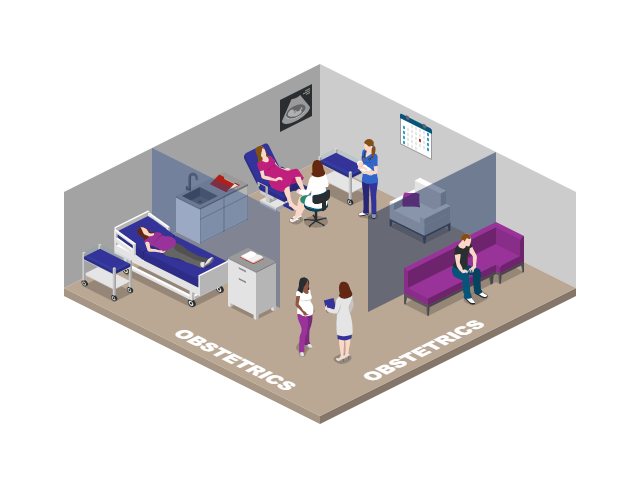
Labor, Delivery, Recovery & Postpartum (LDR / LDRP) Suites:
Spacious birthing rooms designed with home-like aesthetic finishes, motorized birthing beds, concealed medical gas headwalls, private hydrotherapy birthing tubs, and dedicated family support seating.
Obstetric Triage & Assessment Bay:
Rapid-evaluation assessment unit equipped with cardiotocography (CTG) monitors and point-of-care ultrasound for rapid cervical assessment, membrane check, and fetal distress screening.
Obstetric Emergency Operating Theater (C-Section OT):
ISO Class 5 modular operating room situated directly adjacent to the labor ward, equipped for emergency Cesarean sections, hysterectomy procedures, and complex maternal hemorrhage control.
Neonatal Resuscitation & Resuscitation Hub:
A sterile, temperature-controlled corner within each delivery room—and centrally located in the OT—equipped with radiant warmers, micro-puffers (T-piece resuscitators), blended oxygen lines, and suction.
Outpatient Gynecological & Prenatal Consultation Suite:
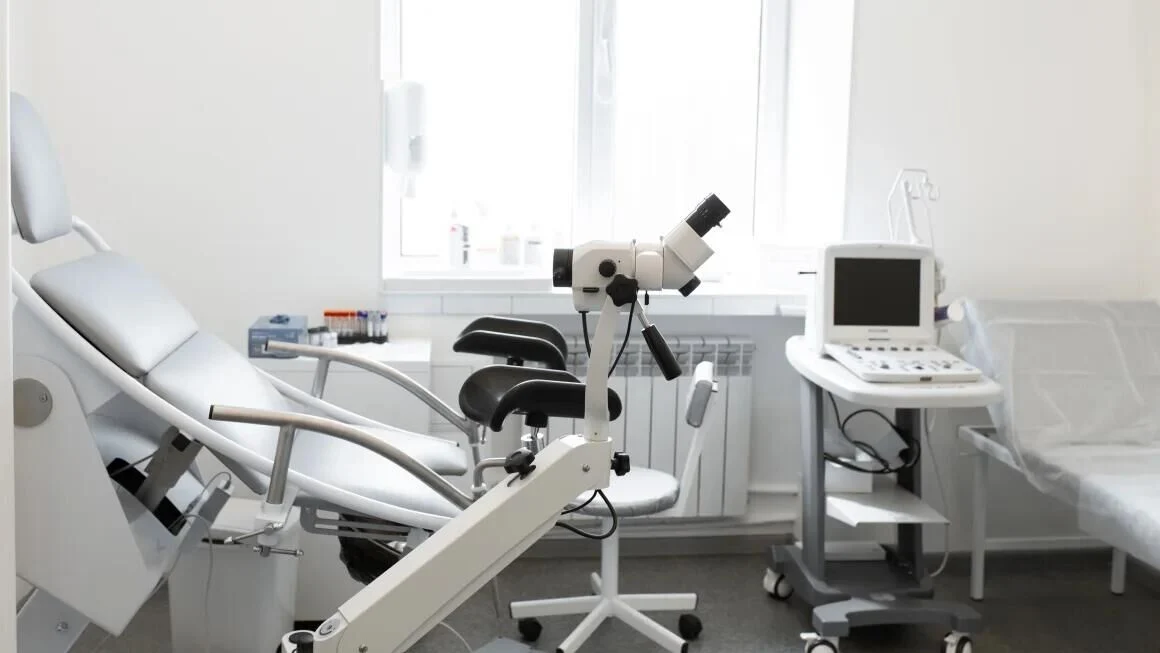
Consultation rooms outfitted with examination tables with integrated stirrups, high-resolution 3D/4D obstetric ultrasound consoles, and colposcopy equipment.
Gynecological Minimally Invasive Surgery (MIS) Suite:
Dedicated surgical suite equipped with high-definition $4\text{K}/\text{3D}$ laparoscopic towers, hysteroscopy units, and electrosurgical generators for benign and oncological gynecological procedures.
Concealed Architectural Headwalls & Medical Gas Delivery (MGPS):
Custom architectural cabinetry paneling that conceals Oxygen (O2), Medical Air, Vacuum, and Entonox (50/50 N2O/O2 labor analgesia) outlets behind sliding wood-grain panels until clinical deployment is required.
Centralized Fetal Telemetry & Tele-Monitoring Network:
Wireless cardiotocography (CTG) network transmitting real-time fetal heart rates and uterine contraction data from bed-side monitors directly to central nursing stations and obstetricians’ mobile devices.
Acoustic Insulation & Noise Reduction (STC ≥50):
High Sound Transmission Class (STC) wall assemblies, drop seals on doors, and acoustic ceiling tiles engineered to ensure patient confidentiality and maintain a quiet, restful environment.
Laminar Airflow & Positive Pressure HVAC in C-Section OTs:
Dedicated cleanroom air handling units (AHU) maintaining positive pressure, ≥20 ACH, HEPA H14 filtration, and strict temperature control (18∘C–21∘C) to eliminate surgical site infections.
Anti-Wandering & Infant Security RFID Systems:
Integrated radio-frequency identification (RFID) infant protection systems pairing mother and newborn ankle bands, triggering automatic door locks and alarm notifications if unauthorized movement occurs.
Specialized Engineering & Safety Standards
Clinical Workflows & Continuum of Care
Antenatal Screening & Triage: Scheduled ultrasound assessments, fetal biometry, and rapid triage upon arrival in active labor.
Integrated Labor & Pain Management: Continuous wireless fetal/maternal monitoring, non-pharmacological positioning, or epidural/Entonox administration in LDR suites.
Delivery & Immediate Neonatal Stabilization: Controlled delivery, immediate delayed cord clamping, skin-to-skin bonding, and APGAR scoring under radiant warming.
Postpartum Recovery & Rooming-In: Transition to postpartum rest, lactation counseling, newborn screening, and discharge planning.