Emergency Department
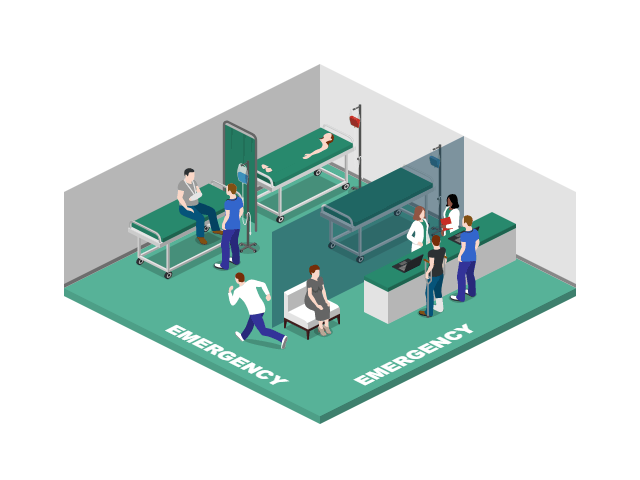
An Emergency Department (ED) is the front line of acute healthcare, operating 24 hours a day, 365 days a year to evaluate, stabilize, and treat patients suffering from sudden life-threatening trauma, acute cardiac events, severe respiratory distress, and critical medical conditions. Designed for maximum throughput and zero bottlenecks, an ED must seamlessly process walk-in patients, ambulance arrivals, and mass-casualty surge events.
End-to-End Architectural Planning, Rapid Triage Engineering, Resuscitation Bays, and Decontamination Infrastructure
MediHeaven delivers complete turnkey engineering for modern Emergency Departments and Level 1 Trauma Centers—combining rapid triage workflows, resuscitation bays, dedicated STAT diagnostic imaging, isolation suites, and direct access corridors to Operating Theaters and Intensive Care Units.
Engineering a turnkey emergency facility requires strategic spatial zoning, immediate proximity to surgical suites and intensive care, high-capacity medical gas delivery, robust infection control, and external decontamination infrastructure. MediHeaven plans and constructs high-acuity ED environments that minimize time-to-treatment, streamline clinical decision-making, and protect patients and staff during high-stress emergency scenarios.
Key Functional Zones & Spatial Planning
Covered Ambulance Bay & Rapid Triage Deck:
Weather-protected multi-vehicle offloading zone connected directly to a high-capacity triage assessment station for immediate patient acuity scoring (e.g., ESI / Manchester Triage System).
Trauma & Resuscitation Suite (Resus Bays):
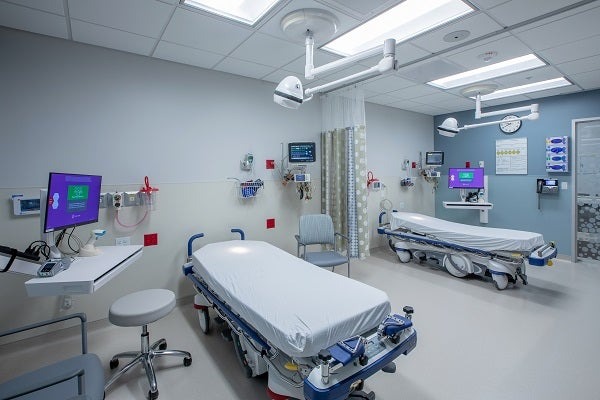
Large, open-plan resuscitation bays equipped with overhead surgical task lighting, dual medical gas ceiling pendants, defibrillators, crash carts, and real-time hemodynamic monitoring for critical stabilization.
Acute Medical & Minor Trauma Treatment Bays:
Separated observation and treatment cubicles equipped with wall-mounted diagnostic consoles, mobile procedure carts, and bedside monitoring for non-life-threatening acute conditions.
Dedicated Emergency Radiology & STAT Diagnostic Suite:
In-department STAT diagnostic wing housing dedicated Digital X-Ray, fast-turnaround CT scanners, point-of-care ultrasound (POCUS), and rapid blood gas analyzers to eliminate patient transport delays.
Decontamination & Chemical/Biological Hazard Unit:
External-access decontamination room featuring automated eyewash stations, full-body emergency showers, specialized hazardous runoff containment tanks, and negative-pressure ventilation.
Negative-Pressure Airborne Isolation Rooms:
Self-contained isolation suites with dedicated anterooms, hands-free scrub sinks, and independent HVAC pressure monitoring for infectious disease containment.
Fast-Track Walk-In Clinic & Pediatric Emergency Bay:
Dedicated low-acuity wing designed to treat minor injuries, lacerations, and pediatric emergencies separately from high-stress major trauma zones.
High-Capacity Medical Gas Pipeline System (MGPS):
Ceiling-mounted utility pendants supplying high-flow Medical Oxygen, Medical Vacuum/Suction, and Compressed Medical Air simultaneously across all resuscitation and acute bays.
Rapid Air Exchange & Negative Pressure HVAC:
Multi-stage HEPA-filtered HVAC delivering $12\text{ to }15\text{ air changes per hour (ACH)}$ in resuscitation bays, with dedicated negative pressure cascades in decontamination and isolation rooms.
Emergency Decontamination Water Management:
Specialized plumbing networks equipped with heavy-duty chemical drainage and subterranean containment tanks to hold contaminated washdown water during hazmat or chemical spill incidents.
Dual Uninterruptible Power Supply (UPS) & Instant Generator Backup:
Isolated Power Systems (IPS) with zero-transfer-time UPS battery banks ensuring ventilators, cardiac monitors, and resuscitation lighting remain continuously powered during municipal outages.
High-Impact, Antimicrobial Cleanroom Construction:
Seamless conductive vinyl flooring, wall bumpers, stainless steel corner guards, and non-porous antimicrobial surfaces engineered for intense, continuous cleaning and heavy gurney traffic.
Specialized Engineering & Safety Standards

Clinical Workflows & Continuum of Care
Ambulance Arrival & Triage Scoring: Immediate clinical acuity assessment upon entry, categorizing patients into resuscitation, acute, or fast-track care streams.
Resuscitation & Immediate Stabilization: Rapid deployment of advanced airway management, hemorrhage control, intravenous fluid resuscitation, and continuous cardiac monitoring in the trauma bay.
Point-of-Care Testing & STAT Imaging: Rapid bedside diagnostics including FAST ultrasound, point-of-care blood gases, and immediate CT/X-ray acquisition.
Definitive Disposition & Rapid Transfer: Direct transfer to the Modular Operating Theater (OT), Intensive Care Unit (ICU), catheterization lab, or inpatient ward via dedicated emergency elevators and corridors.